
Planning research in Kenya? Learn how to coordinate fieldwork logistics, manage research expenditure, strengthen financial controls and support project reporting.
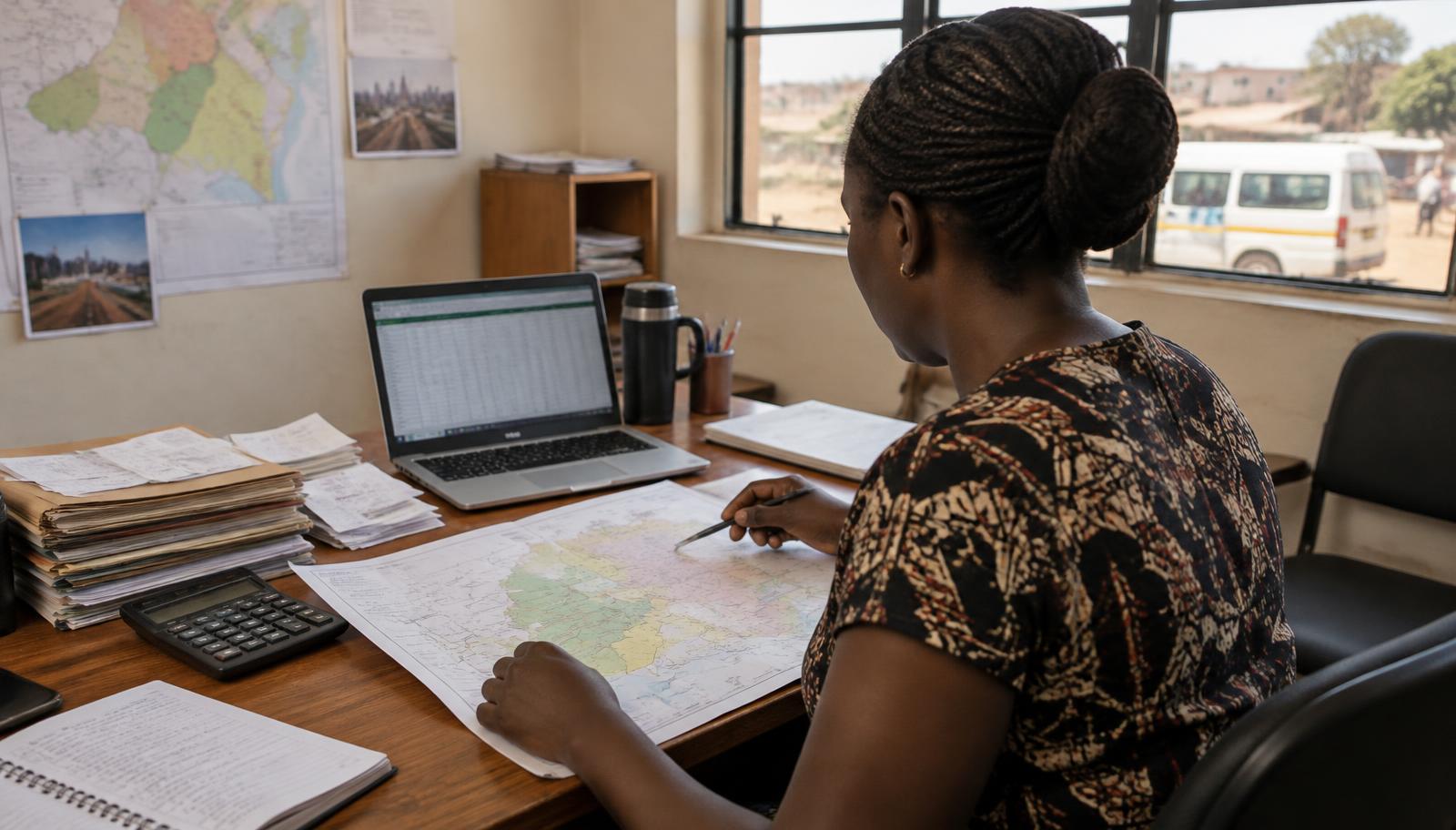
More than a methodology
International research projects depend on more than sound research questions, robust methods and qualified researchers. Implementation also needs reliable fieldwork logistics, disciplined financial administration, local coordination and transparent reporting.
For universities, research institutions, NGOs and development organisations running studies in Kenya, these requirements become harder when the research team is based overseas, or when several researchers, field locations and suppliers have to be coordinated at once. Someone has to arrange transport and accommodation, confirm venues, pay suppliers and enumerators against approved amounts, collect receipts and keep a record that the funder will accept.
Good research project logistics and financial management in Kenya keep fieldwork on plan while the researchers stay focused on the evidence. Not every project needs to outsource these functions. What every project does need is a clear answer to who does each task, under which rules, and how it will be reported.
What research logistics and financial management cover
The term covers the operational and administrative work that lets research activities run efficiently, within an approved budget and according to agreed procedures. It matters most when an institution commissions fieldwork in a country where it has no operational team of its own.
Depending on the project, local support may include:
- Coordinating transport, accommodation and local travel.
- Booking venues and arranging equipment, supplies and communications.
- Processing authorised payments to suppliers, enumerators and research assistants.
- Administering approved reimbursements and daily allowances.
- Tracking expenditure against the approved budget.
- Monitoring fieldwork progress and reporting operational problems.
- Keeping invoices, receipts and payment confirmations.
- Preparing periodic expenditure statements and short activity reports.
Why research logistics matter when conducting research in Kenya
Kenya offers a varied research environment: major cities, peri-urban settlements, rural communities and populations spread over long distances. What a study needs depends on its locations, the season, the method and the people it hopes to reach. A focus group series in Nairobi and a household survey across several counties are very different operations.
Some considerations come up often enough to plan for:
- Distances and travel time between sites, which shape daily interview targets and the number of field days.
- Different needs in urban, peri-urban and rural locations, from venue availability to network coverage for uploading data.
- Accommodation and transport for researchers and field teams moving between locations.
- Venues, equipment, printed materials, airtime and data bundles that have to be in place before the team arrives.
- Activity plans that change when respondents, weather or access arrangements change.
- Local suppliers who need quotations, confirmation and payment on agreed terms, plus a back-up if one falls through.
- Time-zone and communication gaps between international project managers and the team on the ground.
The key logistical requirements of a research project
A well-organised arrangement covers the full operational cycle, from preparation to close-out. Before anything is booked, the local team should review the approved workplan, itinerary, locations, staffing and estimated costs, then turn them into a logistics plan with named responsibilities, booking deadlines, approval steps and contingencies.
Research travel and accommodation
Confirm who is travelling, when and where. Book accommodation close to field sites where practical, agree vehicle hire or fare arrangements in advance, and decide which travel costs are reimbursable before anyone sets off.
Field team and enumerator coordination
Enumerators and research assistants are often selected by the research team. The local partner can then handle deployment schedules, contact lists, attendance records and the approved daily allowances. Agree before deployment how participation is confirmed, what is reimbursable and how exceptions are handled.
Venue, equipment and materials management
List every venue, device, charger, power bank, printed form and consent sheet the study needs. Obtain quotations following the client's procurement procedures, record why each supplier was chosen where required, and get approval before committing funds.
Communications and day-to-day field support
Name one coordinator as the daily point of contact. Agree how the field team reports progress, which channel is used for urgent problems and when the international team expects an update.
Activity scheduling, monitoring and contingency planning
Schedules slip. Plan for transport disruptions, supplier changes and respondent availability by agreeing in advance who can approve an alternative, what spending limit applies and how the change is recorded.
Financial management for research projects in Kenya
Managing research expenditure is not the same as processing payments. Paying an invoice is a single task. Financial management is the system that links the approved budget, each commitment, each payment and the funds that remain, so that the research team can see its position at any point instead of discovering variances at close-out.
In practice, that system usually involves:
- A project-specific budget with clear expenditure categories.
- A cash forecast that shows when funds are needed, so field activities are not left waiting for transfers.
- Agreed approval thresholds and named authorised signatories.
- Coordinated, approved payments to suppliers and project personnel.
- Clear rules for eligible transport costs, allowances and reimbursements.
- A transaction register recording the date, recipient, purpose, budget line, approved amount, actual amount, payment reference and supporting documents.
- Receipts, invoices and proof of payment filed against each transaction.
- Regular reconciliation of funds received against expenditure and outstanding commitments.
- Financial reports prepared for the project manager, the university or the funder in the format they require.
These procedures should be agreed in writing before fieldwork starts and adapted to the contracting institution's own financial rules. Where a funding agreement sets specific requirements, those take precedence over any general practice described here.
How to establish effective financial controls
The checklist below reflects general good practice for international research teams. Controls should be proportionate to the size of the project, its risks and the funder's requirements. A small qualitative study does not need the same apparatus as a multi-county donor-funded survey.
- Written approval before any commitment is made.
- A clear, approved project budget.
- Documented payment requests.
- Verification of each recipient and the applicable rate.
- Supporting documentation for every transaction.
- Traceable payment records, from approval to settlement.
- Regular reconciliation of expenditure.
- Clear responsibility for preparing and reviewing reports.
- Agreed procedures for refunds, unspent advances and disputed expenses.
- A documented close-out process.
Two further practices help. Keep project transactions clearly separated from the service provider's operating expenditure, through a dedicated account or segregated records where the funding arrangement allows. Funds received for implementation are not the provider's revenue, and the agreed management fee should be accounted for separately. Where an original document cannot reasonably be obtained, follow the funder's approved alternative-documentation procedure rather than creating unsupported records.
A local support partner does not replace the university's finance department, its auditors or its legal advisers. It operates inside the controls they set.
Common challenges in research project administration and how to prevent them
Most administrative problems in fieldwork are predictable. Each risk below is paired with a practical way to reduce it.
- Delayed funding and weak cash-flow planning. Prepare a cash forecast by activity and agree replenishment triggers so the field team never relies on informal credit.
- Unclear approval responsibilities. Name the approvers, set thresholds and write down what happens when an approver is unreachable.
- Incomplete receipts or reimbursement records. Issue standard claim templates at training and check documents weekly, not at the end.
- Changes to field schedules. Agree who can approve a revised plan and how its cost implications are recorded.
- Inconsistent documentation across locations. Use one filing structure and one transaction reference system for every site.
- Unreconciled advances. Set a deadline for retiring each advance and reconcile before issuing the next one.
- Delayed supplier payments. Confirm payment terms when booking and track due dates in the transaction register.
- Blurred roles between researchers and administrative staff. Write a short responsibility matrix covering who books, who approves, who pays and who reports.
Monitoring fieldwork progress and reporting deviations
Financial administration and fieldwork monitoring work best together. A project can be on budget but behind schedule, or on time while spending faster than planned. Watching both lets the research team decide early.
A useful periodic report covers:
- Planned versus completed field activities.
- Locations visited and activities supported.
- Transport, accommodation and supplier arrangements completed.
- Outstanding payments and missing documents.
- Actual expenditure against the approved budget.
- Delays, constraints and proposed corrective actions.
- Forecast expenditure and upcoming cash needs.
Keep it short: the current position, significant deviations and the decisions needed from the research team. Issues that could affect research quality, timelines, participants or budget use should be raised as soon as they appear, not saved for the next report.
How to budget for research logistics in Kenya
A realistic budget separates direct research costs from the fee for operational management. Direct costs are what the fieldwork itself requires: transport, accommodation, venue hire, supplies, equipment, communications and approved allowances. The management fee pays for agreed work such as logistics coordination, payment administration, financial tracking, verification and reporting. Bank charges, currency conversion and exceptional logistics may sit in either, so state where they belong.
- Estimate the number of field days and locations.
- Identify staffing and transport needs for each activity.
- Obtain realistic local supplier quotations where possible.
- Define the approval and reimbursement process before fieldwork begins.
- Agree how exchange-rate differences and transaction charges will be treated.
- Set a practical contingency for unforeseen but authorised expenses.
- State the service fee, any taxes that apply and any exclusions. Confirm tax treatment with a qualified adviser.
- Plan advance funding and replenishment so the team is never working on an unagreed credit arrangement.
For a line-by-line approach to survey costs, see our guide to building a field data collection budget in Kenya.
Should international research teams engage a local research support partner?
Plenty of projects manage logistics and finances internally, particularly when the team has staff in Kenya, works in one or two locations, or runs a short study with few transactions. A local partner becomes more useful as locations, suppliers and payments multiply, or when the principal investigator would otherwise spend fieldwork weeks chasing receipts.
Where it fits, a partner can offer local responsiveness, a lighter administrative load for researchers, more consistent expense documentation, better visibility of field operations and cash needs, coordination across dispersed sites, and a clearer route to reporting and reconciliation. None of that guarantees savings or a successful study. It depends on the partner and the agreement.
Choosing a partner takes more than comparing quotations. Questions worth asking:
- Legal and administrative readiness. Is the organisation registered, and can it issue proper invoices and tax documentation?
- Relevant experience. Does the team understand research fieldwork, enumerator coordination and monitoring and evaluation?
- Financial controls. How will it document approvals, process payments, reconcile spending and safeguard funds?
- Local coordination capacity. Can it arrange logistics in your actual study locations?
- Reporting quality. Can it produce clear expenditure statements with supporting documents on time?
- Communication and escalation. Is there a named contact, a reporting schedule and a route for raising problems?
- Transparent fees. Is the management fee proportionate and clearly separate from direct costs?
- References, confidentiality and data protection. Can it share references where available, and how does it protect participant and project data?
For a newer firm, a well-defined operating framework and an experienced delivery team are relevant to the assessment. Buyers should still verify the specific experience, references and resources available for their assignment.
What to include in a research logistics and financial management agreement
Financial arrangements should be agreed in writing before any project activity begins. A practical agreement covers:
- Scope of services.
- Project locations and implementation period.
- Budget and eligible expenditure categories.
- Who approves which transactions.
- Advance funding, cash-flow forecasts and replenishment.
- Supplier selection, payment processing and reimbursement procedures.
- How the management fee is calculated.
- Reporting schedule and required supporting documents.
- Treatment of taxes, refunds and unspent balances.
- Confidentiality, data protection and record retention.
- Change management, dispute resolution and close-out responsibilities.
It should also state plainly that the provider will not commit funds outside the approved scope without the required authorisation. Have the final terms reviewed by your institution's contracts or legal office.
A practical pre-fieldwork checklist
Before the first team leaves for the field, confirm each of these is in place.
- Approved workplan and field schedule.
- Confirmed team and contact list.
- Travel, accommodation and transport arrangements.
- Approved budget and cash forecast.
- Supplier arrangements confirmed.
- Written expenditure approval procedures.
- Payment and reimbursement templates.
- List of required supporting documents.
- Reporting frequency and responsible personnel.
- Emergency contacts and contingency arrangements.
- Close-out and reconciliation requirements.
How Sonivance supports research projects in Kenya
Sonivance Limited is a Kenya-based research and data consultancy working with universities, NGOs, research institutions and consultancies. We connect research planning with practical implementation, because reliable evidence depends on well-coordinated field activities, clear communication, proper documentation and responsible use of project resources as much as on the method.
Depending on the assignment and agreed scope, we can support:
- Research and fieldwork planning and coordination.
- Logistical planning and local supplier coordination.
- Digital data collection and fieldwork monitoring.
- Monitoring, evaluation and learning support.
- Data quality assurance and reporting.
- Administration of approved expenditure and payment coordination, where included in the agreed assignment.
- Expenditure tracking, documentation and reconciliation support, where contracted.
Sonivance is an emerging firm supported by consultants and researchers with experience across research, monitoring and evaluation, fieldwork and data assignments. The exact scope of any engagement depends on the client's requirements and the agreed terms. We do not provide audit or legal services; those remain with your institution and its advisers.
Frequently asked questions
- Does a local partner replace our university's finance office?
- No. A local partner works within the controls set by your institution and funder. Your finance department, auditors and legal advisers keep their roles.
- When should financial procedures be agreed?
- Before any project activity begins. Approval thresholds, reimbursement rules, reporting formats and close-out requirements should all be in writing first.
- Can Sonivance pay enumerators and suppliers on our behalf?
- Where it is included in the agreed assignment, Sonivance can coordinate approved payments and keep the supporting documentation. The scope is set case by case in the terms of engagement.